
This article contains affiliate links. If you buy through them, we may earn a small commission at no extra cost to you.
Last updated: October 2026
So you’ve had your first taste of mixing on a laptop or phone, and now you’re hooked. Next comes the big question: what gear should you actually buy?
It’s easy to get overwhelmed here. There are loads of controllers out there, they all claim to be perfect for beginners, and the jargon doesn’t exactly help. We’ve been teaching people to DJ for over 10 years, with more than 20,000 students through our courses, and we’ve tested pretty much every bit of beginner gear going. So we’ve put together this guide to cut through the noise and help you pick the right setup for you.
What does a DJ controller actually do?
A DJ controller is basically a set of decks and a mixer that plugs into your laptop and controls your DJ software. It doesn’t play any music itself. It just gives you proper hands-on control, so you’re not stuck clicking around with a mouse.
Nearly every beginner controller follows the same layout: two decks with jog wheels, performance pads under each, and a mixer in the middle. That’s good news, because whatever you learn on one will carry over to almost any other setup, all the way up to the CDJs in clubs.
When choosing your first one, look for two things: software you’ve already learned on, so you can pick up where you left off, and a proper 3-band EQ on each channel, because that’s how you’ll learn to blend tracks smoothly. We’d steer clear of the very cheapest controllers you’ll see online, as most people outgrow them within weeks. That’s why all of our picks start at £89.
All you need to get going is a laptop and the USB cable in the box. If your laptop ran our free course, it’ll be fine. Some controllers also work with a phone or tablet, which we’ve flagged below.
Our top beginner controllers
We’ve had our hands on just about every beginner controller out there, and these are the four we’d happily recommend to our own students. We’ve listed them from cheapest up, and there’s a Crossfader course for every one of them.
Hercules DJControl Inpulse 200 MK3
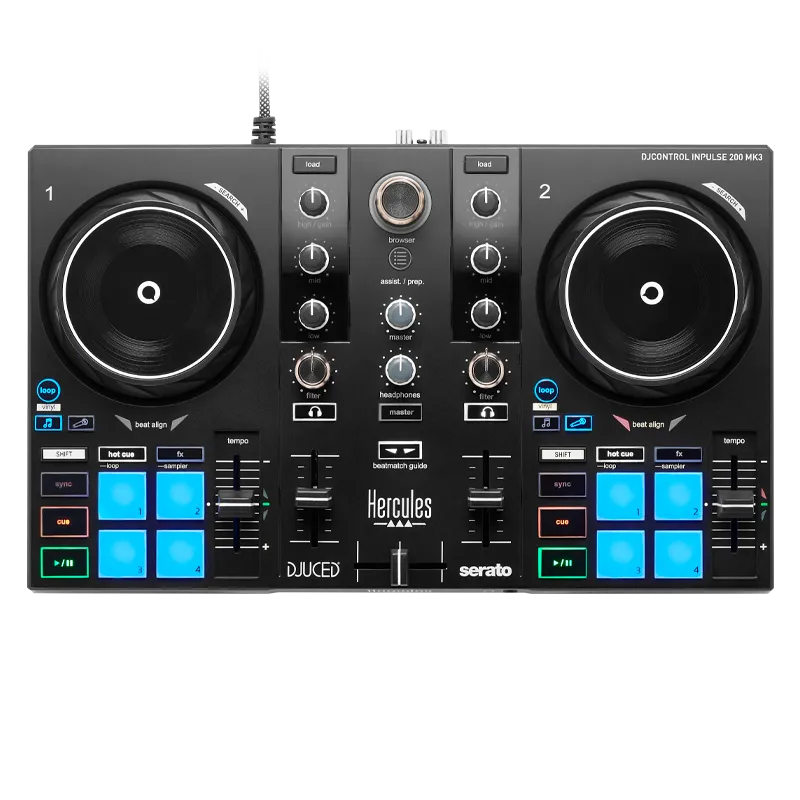
£89 doesn’t get you much in the way of DJ gear these days, so we were pretty surprised by how much Hercules have managed to pack in here. You get decent-sized touch-sensitive jog wheels, a proper 3-band EQ and dedicated buttons to isolate the vocals or instrumental of a track, which is something we’re not used to seeing on gear this cheap.
There are some handy learning aids too. Lights on the decks show you which way to nudge a track when you’re beatmatching, which can be a big help early on (just don’t rely on them forever, as your ears are still the best tool you’ve got). And if you fancy recording or streaming your mixes, it can send your audio straight to Twitch, YouTube or Instagram without any extra kit.
Of course, at this price there are a few compromises. There are no proper effects controls, you only get four pads per deck, and the USB cable is fixed to the unit, so if that goes, the whole controller goes with it. It also doesn’t work with phones, so you’ll need a laptop.
It runs on Serato DJ Lite rather than rekordbox, but don’t let that put you off. Our Serato Beginner course picks up right where the free courses left off.

Numark Party Mix III
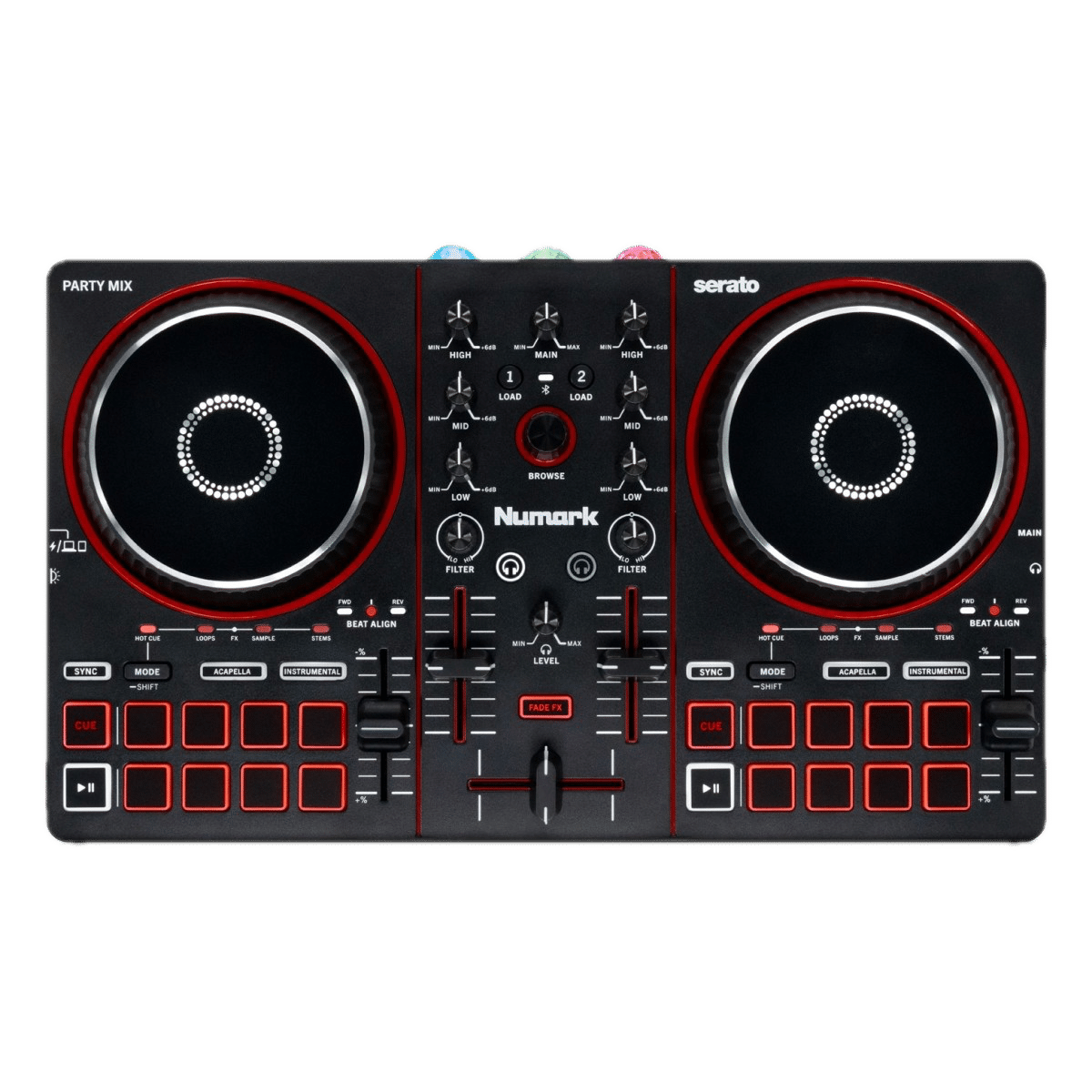
With a light show built into the back, it’d be easy to write the Party Mix III off as a bit of a toy. But don’t be fooled, because underneath the flashing lights is a properly capable controller.
Unlike a lot of entry-level gear, you get a full 3-band EQ and filter on each channel, eight performance pads per deck for cues, loops, samples and effects, and dedicated buttons for stems. That means you won’t feel held back too quickly as your skills grow. It also connects to your phone or tablet over Bluetooth using djay, so you can leave the laptop at home if you want to.
The main thing missing is a proper effects section, and you only get 3.5mm outputs, which is fine for home speakers but not ideal if you want to plug into anything bigger.
It doesn’t run rekordbox, so you’ll be switching to Serato DJ Lite (which comes free) or djay. That’s no bad thing though, as our Numark Beginner course is built around this exact controller, so you’ll be learning on the same gear you’re watching.

AlphaTheta DDJ-FLX2
If you got on well with rekordbox in our free courses and want to keep using it, the FLX2 is the most affordable way to do it. You can carry on exactly where you left off, with nothing new to learn on the software side.
It’s small, light and works with pretty much anything: Mac, PC, iPhone, iPad or Android. It’s also packed with features designed to make your first mixes sound great. Smart Fader automatically blends tracks as you move the crossfader, while Smart CFX lets you add combinations of effects with a single knob. These won’t replace learning to mix properly, but as a way to get started, we’re all for it.
Like most controllers at this price, it’s entirely plastic, so it’s built for bedroom practice and the odd house party rather than regular gigs. There’s also no proper effects section, so you’re limited to the smart features and pad effects.
Our DDJ-FLX2 Beginner course takes you from plugging it in for the first time to mixing with confidence.
AlphaTheta DDJ-FLX4
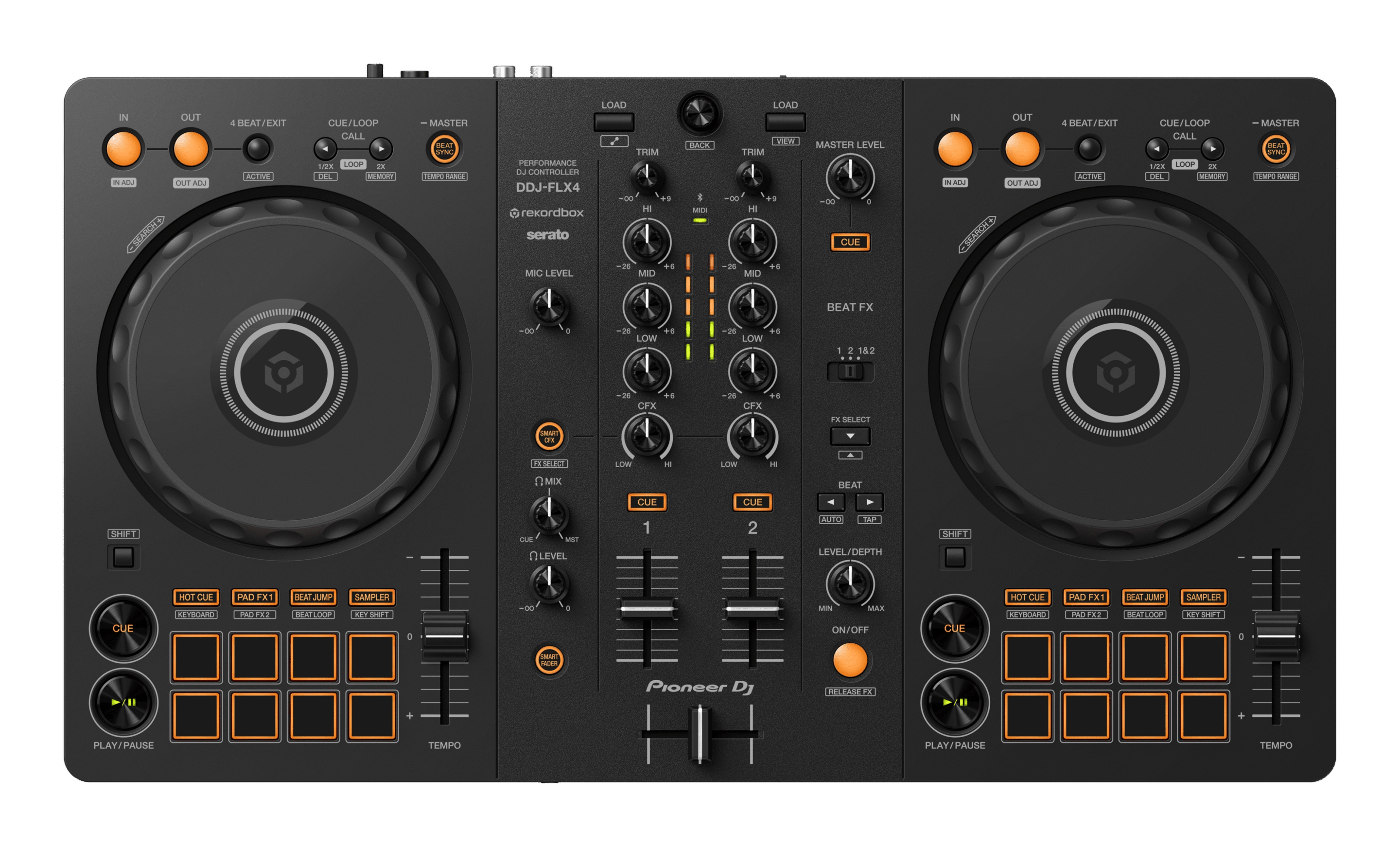
If you can stretch your budget a bit, this is the one we’d point most beginners towards. It’s the controller behind our best-selling course, and it doesn’t come with the compromises you’ll find on the cheaper options.
You get a proper beat FX section, a gain knob on every channel and RCA outputs for plugging into decent speakers. The layout is also a lot like the club gear you’ll find in most venues, so when you do step up to CDJs, it won’t feel like starting from scratch. It still has Smart Fader and Smart CFX to help you out early on, and it works with phones and tablets through the rekordbox app.
The only real catch is the price. But if you’re serious about DJing, it’s the kind of controller you won’t need to replace any time soon, so it can actually save you money down the line. If you’re not sure yet whether it’ll stick, one of the cheaper options is a great place to start.
It runs rekordbox, so it follows on from our free courses perfectly, and our DDJ-FLX4 Beginner course will take you the rest of the way.
How they compare
Here’s how our four picks stack up side by side:
| Inpulse 200 MK3 | Party Mix III | DDJ-FLX2 | DDJ-FLX4 | |
|---|---|---|---|---|
| Price | £89 | £119 | £159 | £279 |
| Who it’s for | The cheapest proper start | More features for not much more | rekordbox on a budget | One that lasts |
| Software | Serato DJ Lite, DJUCED | Serato DJ Lite, djay, VirtualDJ | rekordbox, Serato, djay | rekordbox, Serato |
| Same software as our free courses | No | No | Yes | Yes |
| Works with phone or tablet | No | Yes | Yes | Yes |
| Pads per deck | 4 | 8 | 8 | 8 |
| Effects | Pad FX only | Pad FX, Fade FX | Smart CFX, Pad FX | Beat FX, Smart CFX |
| Our course | Serato Beginner | Numark Beginner | DDJ-FLX2 Beginner | DDJ-FLX4 Beginner |
Want to see a few more options? Check out our full guide to the best beginner DJ controllers.
What about software?
For the most part, your controller decides your software for you. Our free courses use rekordbox, so the FLX2 and FLX4 will feel instantly familiar. Go for the Inpulse or Party Mix and you’ll be switching to Serato, but there’s no need to worry. EQing, beatmatching and phrasing work exactly the same whatever software you’re on.
We teach rekordbox, Serato, Traktor and djay, so whichever way you go, we’ve got a course to help you get the most out of it. If you want to dig into the differences, have a read of our guide to the best DJ software for beginners.
Headphones
Alongside your controller, a decent pair of headphones is the one other thing we’d say you really need. DJs are famous for always having a pair round their necks, and for good reason: they let you hear and line up your next track before anyone else does.
There are a couple of things to look out for. Make sure they’re wired, as Bluetooth adds a delay that makes beatmatching impossible. And go for closed-back headphones, which block out the room so you can actually hear what you’re doing.
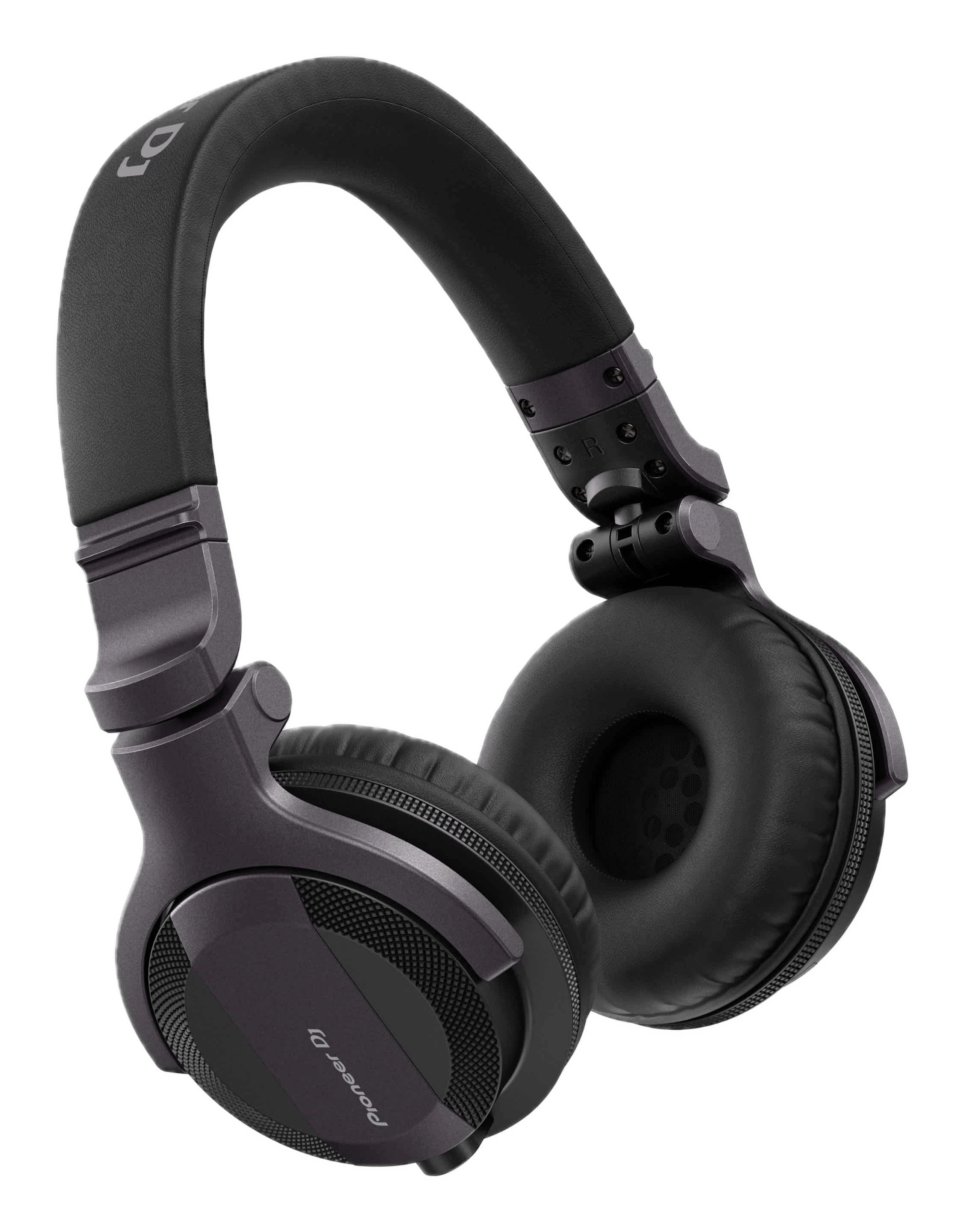
If you’re on a budget, the Pioneer DJ HDJ-CUE1 are the pair we end up reaching for time and again in the Crossfader studio. They’re light and comfy, with plenty of low end for beatmatching.
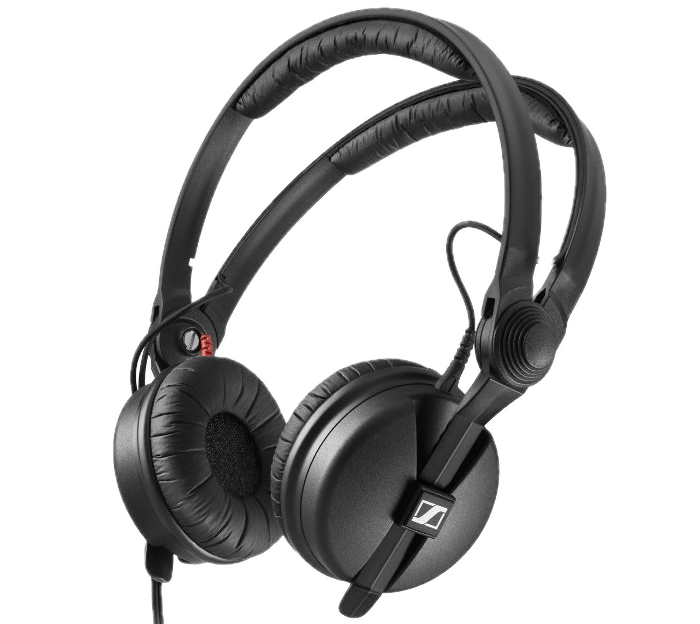
If you can spend a bit more, you can’t go wrong with the Sennheiser HD-25. They’re probably the most iconic DJ headphones ever made, and they’re built to last. Pretty much every part can be replaced, so one pair can see you through years of gigs.
For more options, check out our full guide to the best DJ headphones.
Speakers
The good news is you don’t need to buy speakers straight away. Any home speakers with an aux input will do the job when you’re starting out. Just plug them into your controller with a cable: a 3.5mm cable for the Party Mix III and FLX2, or an RCA-to-3.5mm cable for the Inpulse and FLX4. The one thing to avoid is Bluetooth as, again, the delay makes it impossible to mix in time.
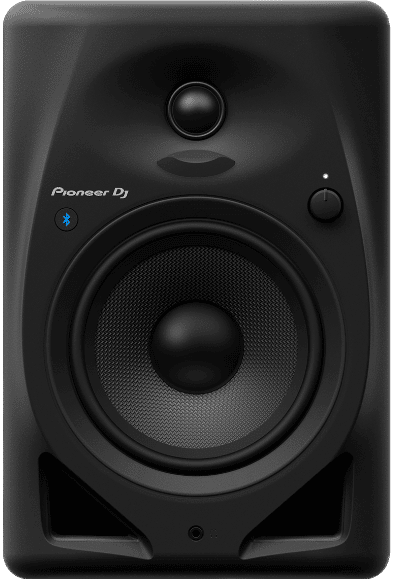
Once you’re mixing regularly, a proper pair of speakers makes it much easier to hear what’s going on in your mix, like when two tracks are clashing. When you get to that point, we like the Pioneer DJ DM-40D. They’re compact, clear and designed with DJs in mind.
For more options, have a look at our guide to the best DJ speakers.
Learn to DJ on your new gear
Once your controller arrives, you’ll want to know how to get the most out of it. Whichever one you go for, we’ve got a course to take you from plugging it in for the first time to mixing with confidence.
Haven’t signed up yet? Join Crossfader for free and you’ll unlock a personalised learning journey and two free courses, so you can start mixing right away on the laptop or phone you’ve already got.