
Planning a DJ set doesn’t have to mean strictly figuring out every beat of each track you’re going to drop before you even get behind the decks. It’s all about giving yourself the confidence so that when you step behind the decks, you’re not guessing, panicking, or scrolling endlessly through your library.
This guide walks through how DJs actually plan sets in real life, with some must-know tips, whether you’re a beginner DJ heading into your first live gig, or you’ve been DJing for years and just want a better way to approach sets. In fact, many of our own weekly DJ Mix videos have been created using these tips!
How to Plan A DJ Set – Video Tutorial
Start by listening to more music
This may seem obvious, but to make a great mix, you need great tunes. Before you even open your DJ software you need to make sure you’ve got a whole library full of
Use streaming platforms like Spotify or Apple Music to discover new tracks. Shazam things when you hear them on the radio, or out somewhere. Listen to DJ sets online and dig into tracklists.
Beyond just having great tunes, you need to know your music inside out. As you listen to music, try to figure out the structure and phrases and pick out any key elements in the track, like a vocal that sits nicely by itself or a groovy bassline. These can be vital points to set hot cues (which we’ll get to later).
Build your DJ music library
Once you’ve found music you like, the next step is getting it into a DJ-ready library.
That might mean downloading tracks from DJ pools like BPM Supreme, DJcity, ZipDJ, or Digital Music Pool. If you play electronic music, you’ll probably be buying tracks from somewhere like Beatport. You might also be streaming music directly inside your DJ software using services like Beatsource or TIDAL.
However you source your music, once it’s in your DJ software it gets analysed. That analysis gives you BPM, key, track length, waveforms, and other info that becomes essential later when you’re actually planning and playing a set.
Want to know the best places to find these tunes? Check out our full guide on how to listen to music like a DJ.
Prepare your tracks with cue points
Cue points are one of the most important parts of planning a DJ set. They turn your music library into something you can perform with, rather than just scroll through.
A simple starting point is setting just two cue points on every track.
One at the intro, usually on the first clean drum beat. This tells you exactly where a track is easy to mix in.
Another near the outro, where the energy drops and elements strip back. This tells you when you need to start bringing the next track in.
Once you do this consistently, you always know where you are in a song, even if you haven’t played it for months. You can add more creative cue points later, but intros and outros are the backbone of planning.
Free Lesson on How to Prepare a DJ Set – Where To Set Up Hot Cues
This free DJ lesson has been taken from our Rekordbox – Intermediate DJ Course.
Check out this course if you feel like you’re at this level and want to continue learning about your equipment’s performance features and how to start using them. If you use another software, check out our course selector on this page here.
Tip #02 – Mixing In Key
Harmonic mixing… it’s a prevalent talking point in the DJ industry.
What is mixing in key? What do we think about it?
Watch the video below to find out, or read this in-depth article here on what it is and what we think about applying it to your sets.
Tip #03 – Using Performance Features
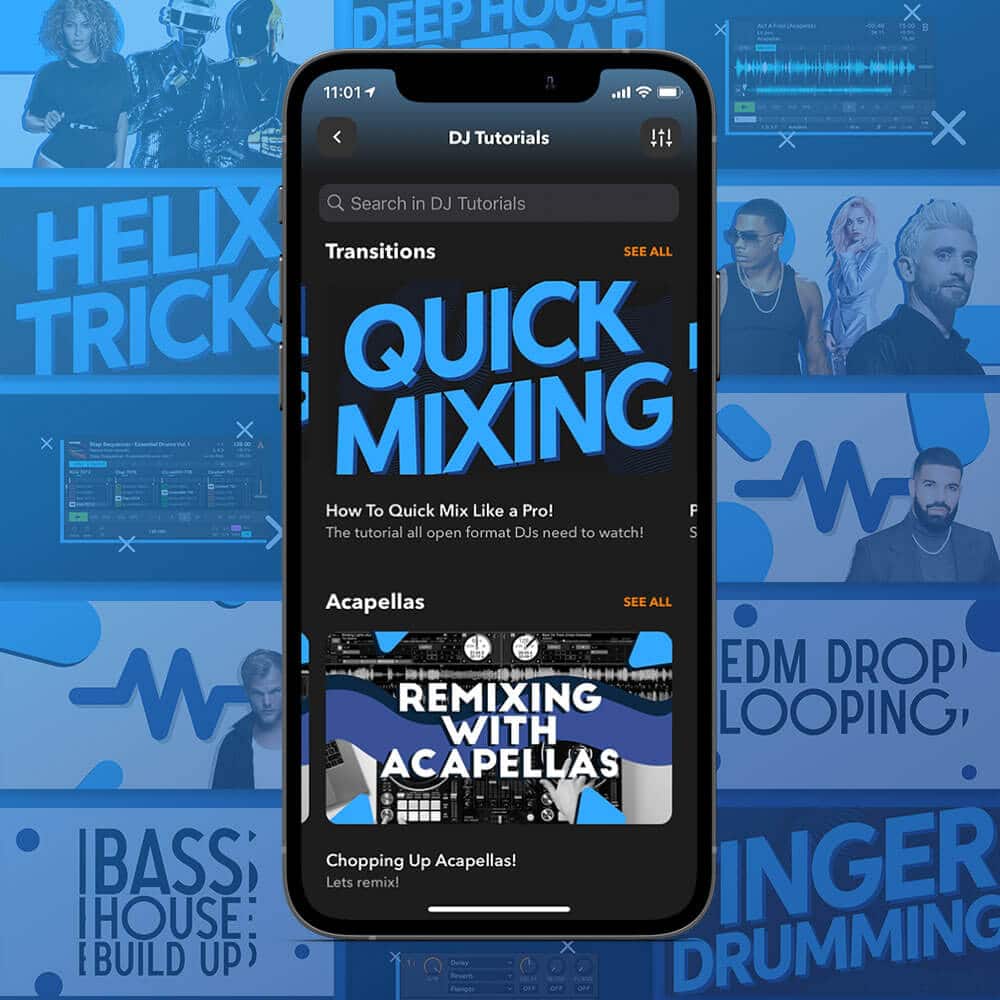
TODAY, most DJ controllers and set-ups have a wide range of performance features available. From the essential hot cue’s to slicer mode, sampler to Pad FX and much more! Are you using your DJ equipment to its full potential? Have you thought about how to use the slicer mode creatively? Or, how to use the sampler to remix a song live? There are so many options, and this is something we focus heavily on in our DJ courses, especially the intermediate ones. We then take your learning further inside the DJ Hub, updated weekly with new advanced tutorials and mix breakdowns.
Tip #04 – Mixing Between Different Genres
This is an excellent way to show off your DJ skills and make a creative DJ mix/routine. By transitioning between different genres, you’re able to manipulate the energy level of your set and surprise the listener.
There are a few different ways this can be done. Check out the two videos below to learn how to perform this advanced technique!
Free DJ Lessons – Transition Mixing Between Genres
Example #1 – House to Drum & Bass (& back again!)
This video is taken from our XDJ Intermediate DJ Course.
Example #2 – Using SYNC to Transition
This example is taken directly from our DJ Transitions Course, which is full of unique ways to transition between all genres!
#Tip 05 – Just MIX!
Ok, so this isn’t precisely a mixing technique or free DJ lesson but just something you must never forget. Ideas are hard to pluck out of thin air. You need to mix regularly and play with your music. The more you mix, the more ideas will start to come. There is no way you’re going to be able to plan a DJ set or routine without getting on the decks and just mixing between songs.
Remember to have fun and not turn the DJ mix or routine into a stressful situation. Don’t put too much pressure on yourself, and enjoy the art and craft of being a DJ!
Thanks for reading, and let us know in the comments if you have any questions! Happy mixing!
Pioneer DJ-200 DJ Course
4.75 hours
28 lessons
Beginner
Rekordbox DJ Course
5.5 hours
37 lessons
Beginner
Rekordbox DJ Course
7.5 hours
49 lessons
Intermediate
Pioneer DDJ-400 DJ Course
7 hours
30 lessons
Beginner
Pioneer DJ DDJ-FLX4 Course
7 hours
41 lessons
Beginner
Complete DJ Package
835 hours
1300+ lessons
Creative
Pioneer DJ DDJ-FLX4 Pro Course
9.5 hours
49 lessons
Intermediate
DDJ FLX4 Beginner To Pro Bundle
16.5 hours
90 lessons
Beginner
Pioneer DDJ SB3 DJ Course
3.75 hours
28 lessons
Beginner
Serato DJ Course
3.5 hours
23 lessons
Beginner
Serato DJ Course
8.5 hours
47 lessons
Intermediate
Pioneer DJ DDJ-FLX4 Course
7 hours
41 lessons
Beginner
Complete DJ Package
835 hours
1300+ lessons
Creative
Pioneer DJ DDJ-FLX4 Pro Course
9.5 hours
49 lessons
Intermediate
DDJ FLX4 Beginner To Pro Bundle
16.5 hours
90 lessons
Beginner
Numark Beginner Course
4.2 hours
35 lessons
Beginner
Denon DJ Prime Course
6.5 hours
36 lessons
Beginner
Denon DJ Prime Course
5 hours
40 lessons
Intermediate
Complete DJ Package
835 hours
1300+ lessons
Creative
Traktor DJ Course
3.5 hours
23 lessons
Beginner
Traktor DJ Course
3 hours
30 lessons
Intermediate
Complete DJ Package
835 hours
1300+ lessons
Creative
Great tutorials Jamie! Love the creativity!