
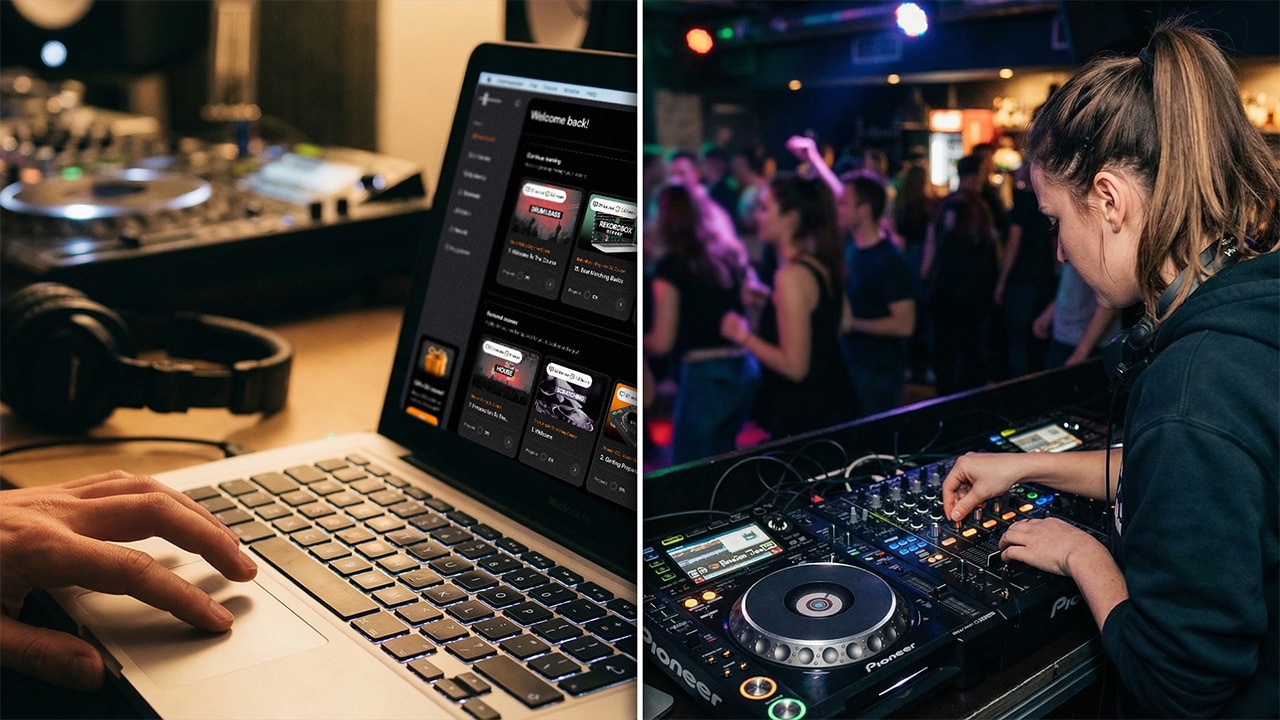
Yes, you can absolutely learn to DJ online because the technical core of the craft, including beatmatching, phrasing, and software navigation, follows clear patterns that translate perfectly to video. While a screen cannot simulate the physical energy or unpredictable environment of a live crowd, it is the most efficient way to master your gear and technical workflow before you ever step into a professional booth.
It is an understandable question to ask. DJing is a practical, hands-on skill that is all about playing to real rooms full of real people, so it is natural to wonder whether you can actually pick up these skills via a screen. But for most modern DJs, the screen is exactly where the foundation is built.
What Online DJ Learning Is Actually Good For
The key thing is that learning to DJ starts with fundamentals. Before you think about getting live gigs, you have to nail the core technical stuff. You need to understand your software, how tracks are structured, and the basic mixing techniques. Those are practical skills, but they follow clear patterns, which makes them well-suited to being shown on screen.
When you watch a transition tutorial on screen, you can see exactly where the tracks start and what the DJ is doing with controls like the faders and EQ. Being able to rewind that moment and go back over the key moments makes the process much easier to understand. That ability to take things at your own pace and practise alongside the lesson is one of the biggest advantages of learning DJing online.
The software and preparation side of DJing works in a similar way. These are logical, step-by-step tasks that are actually easier to learn via a screen than by watching someone move through menus in a dark booth:
- Library Prep: Organising your playlists and tagging tracks so they are easy to find under pressure.
- Track Analysis: Setting your hot cues and checking waveforms in software like Rekordbox or Serato.
- The USB Export: Correctly formatting and syncing your music to a drive so it actually works on Pioneer CDJs.
When an instructor breaks these down, you can pause the video and replicate the exact mouse click or button press on your own setup.
Where Online Learning Falls Short
Learning how to mix in your bedroom is very different from standing behind the decks in front of a crowd. The technical skills might be the same, but the environment changes everything.
When you play live, you are reacting in real time. The DJ before you might leave the room at a completely different tempo or energy than you expected. A transition that sounded clean at home might behave very differently on a large system. Situations like that force you to adjust quickly rather than follow the plan you had in mind.
There are also other variables that only really appear once you start playing in real venues. For example:
- The booth setup might be unfamiliar or arranged differently from what you practise on
- The room might sound very different from the speakers you are used to
- The crowd might respond in ways you didn’t anticipate
- The pressure of people watching changes how you perform
These are the sorts of things that you only really learn how to handle by actually being in the room.
Why Some DJs Struggle Learning Online
If online DJ learning sometimes gets a mixed reputation, it’s not because it inherently doesn’t work, but rather because of how people end up learning.
A common problem is jumping from one random tutorial to another. Social platforms and video sites tend to promote the most eye-catching techniques, not necessarily the most useful ones. That means you might see complex transitions and tricks long before you’ve properly learned the fundamentals that make them work.
Proper progress tends to happen much faster when skills are learned in the right order. That means you learn the basic core skills of beatmatching and phrasing before learning transitions and then adding those more creative tricks.
Another thing that sets good online courses apart is that they often go beyond just videos. They create a learning environment where you can ask questions, share mixes, and get feedback from other DJs or instructors.
That thinking is what led us to build Crossfader. Instead of isolated tips or random tutorials, the goal is to guide DJs through a clear progression of skills. Lessons build on each other, so each new skill strengthens the foundations you’ve already built.
Ready to Learn DJing the Right Way?
If you want a clear path instead of jumping between random tutorials, you can join Crossfader for free and explore a customised learning journey and three free courses.

0 Comments