
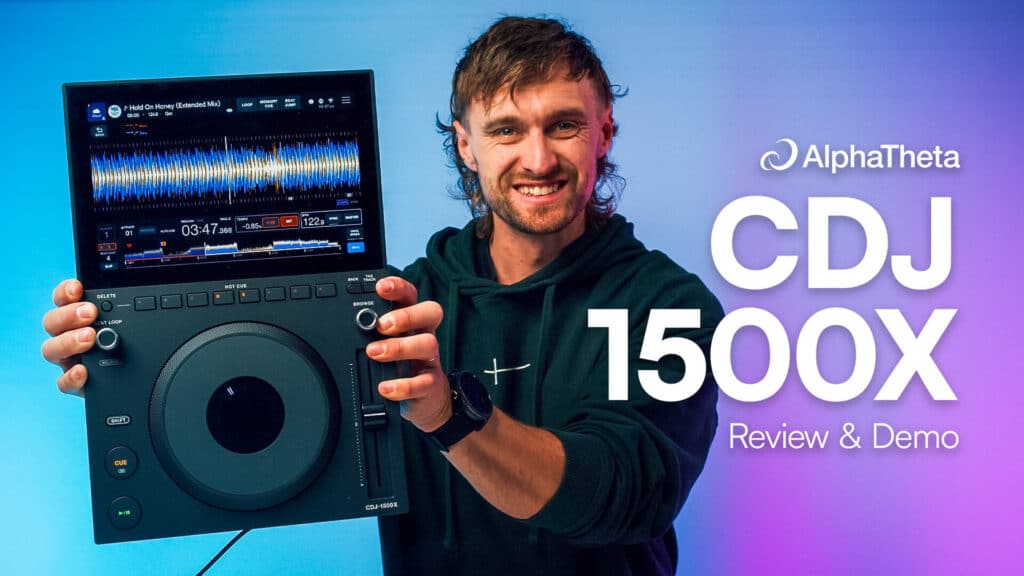
- Price: £1,469 per player
- Packs the 10.1-inch touchscreen, Wi-Fi and cloud playback of the flagship CDJ-3000X into a much tighter, space-saving format
- Strips back top-tier elements like hardware key syncing and mechanical jog adjustments to keep the cost down
- Features CoBeat, a brand new digital request service for handling crowd tracks straight on your player screen
- A great modular option for mobile DJs, smaller bars, and home users working on a budget
CDJs are the dream setup for pretty much any DJ. You’ll find them in every pro club’s booth and on festival stages around the world. But as their price has skyrocketed, they’ve become unattainable for all but the professional users.
Pioneer DJ used to plug this gap between the pro gear and controllers with a more budget option called the XDJ-700. While this modular player is technically still available, it’s increasingly ancient compared to modern gear and is well overdue for an overhaul.
The new CDJ-1500X is exactly that, and AlphaTheta hope it will bring much of the CDJ3000X’s power at a much more reasonable cost and in a smaller form factor. Does it live up to the years of waiting, and is it a worthy younger brother to the flagship?
Design and Build
Immediately, when we got our hands on this, it was crazy to see just how dinky it is. It really is like someone took a shrink ray to a CDJ-3000X. It measures 252.1 mm wide, 374.7 mm deep, and 116.5 mm high, and weighs in at just 3.6 kg.
The thinking is that this is aimed at smaller spaces where room in the DJ booth is at a premium, which makes a lot of sense, as the 3000Xs are pretty hefty. It’s great how much narrower it is, but we think the gap between the top of the unit and the top of most mixers looks odd and means you’re not really saving as much vertical space on your full setup (perhaps AlphaTheta have a similarly cute mixer in the works).
The build follows AlphaTheta’s ongoing trend towards sleeker, more minimal looks. It’s got the same matte black plastic housing you’ll find on their newer gear, like the RMX-IGNITE, and overall, in our opinion, looks pretty tidy.
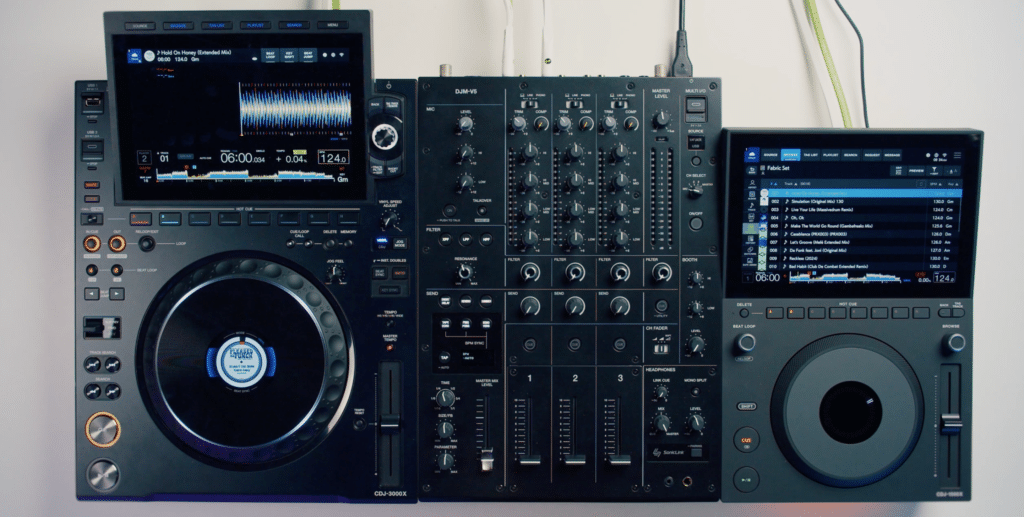
Another area the 1500X has been slimming down is with the power supply. It works off a USB-C connection with an external power brick, rather than the classic 3-pin mains cable you get on other CDJs.
Jog Wheels
With the cut-down price, AlphaTheta were always going to have to make some sacrifices, and the jog wheels are one area where you can tell costs have been cut. They’re basically the same mid-sized capacitive wheels as you find on the Omnis Duo, but, compared to the full CDJs, they’re much smaller and not mechanical or adjustable.
They’re by no means bad and will be more than enough for most mixing, but if you like having that specific tension or proper full-size platters for scratching, you’ll be disappointed.
Performance Features
As you might expect on a cheaper, more pared-down CDJ, a few classic performance features are missing or scaled back.
The big omission that will put a lot of people off is that there’s no Key Sync or Key Shift. This feels like a bit of a step backwards after it’s been introduced on all of AlphaTheta’s recent DJ players and all-in-ones. We can only imagine that this is due to limitations of the onboard hardware, but considering some of the other fancy stuff this can do, it seems odd.
Loops are now controlled by one rotary encoder rather than the traditional in/out buttons. You just push the knob to activate it and rotate it to shorten or lengthen the loop.
There are far fewer controls in general on the face of the CDJ, and that’s largely because a lot of these are now controlled via the touch screen. Things like quantise, slip mode, vinyl, master tempo and beat sync are all missing and replaced by digital on-screen versions. Depending on how often you use these buttons, this will either be slightly frustrating or a welcome clean-up for a busy front panel.
Pads and cues
The performance pads are fairly familiar to current CDJ users, both in look and placement. One slight downside is that they only light up in one colour, though. The cues are shown on screen, however, so you can see what type you’re using.
On the screen, you can also change these to Gate Cues, meaning they only play when you’re pressing them and stop when you release. That’s something that’s come over directly from the 3000X and is perfect for those James Hype style tricks.
On board analysis
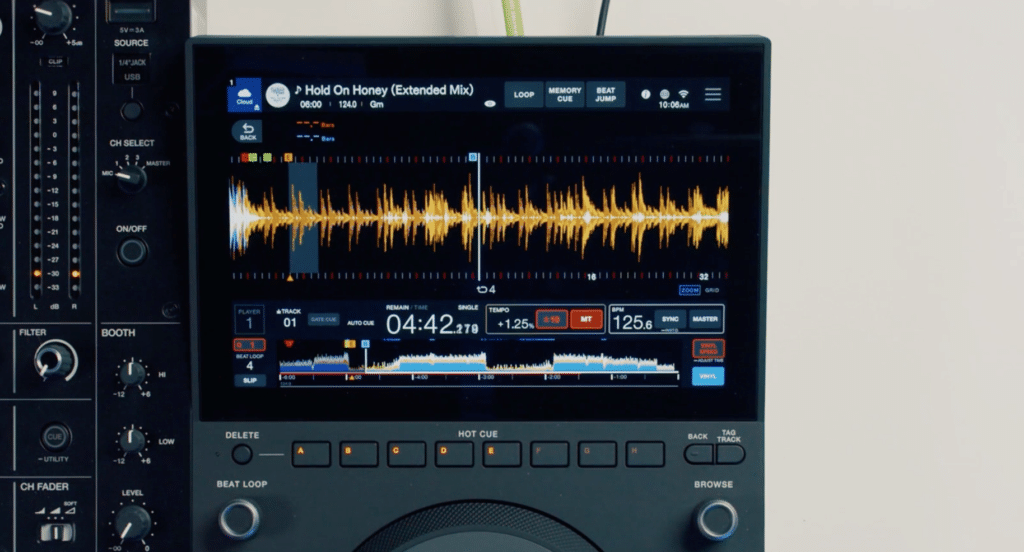
A huge step forward is that you can now analyse right there on the CDJ. That means you can load up a track that you haven’t run through Rekordbox, and the CDJ can figure out all the BPM and beat grid info.
You can pick between either Normal or Dynamic analysis, with the latter being great for flexible beatgrids for non-quantised music like old disco records.
This is a great addition, and it’s interesting that it’s making its debut on the more budget gear, so we can assume it’s only a matter of time before this is added to the rest of the CDJ lineup.
Screen and Browsing
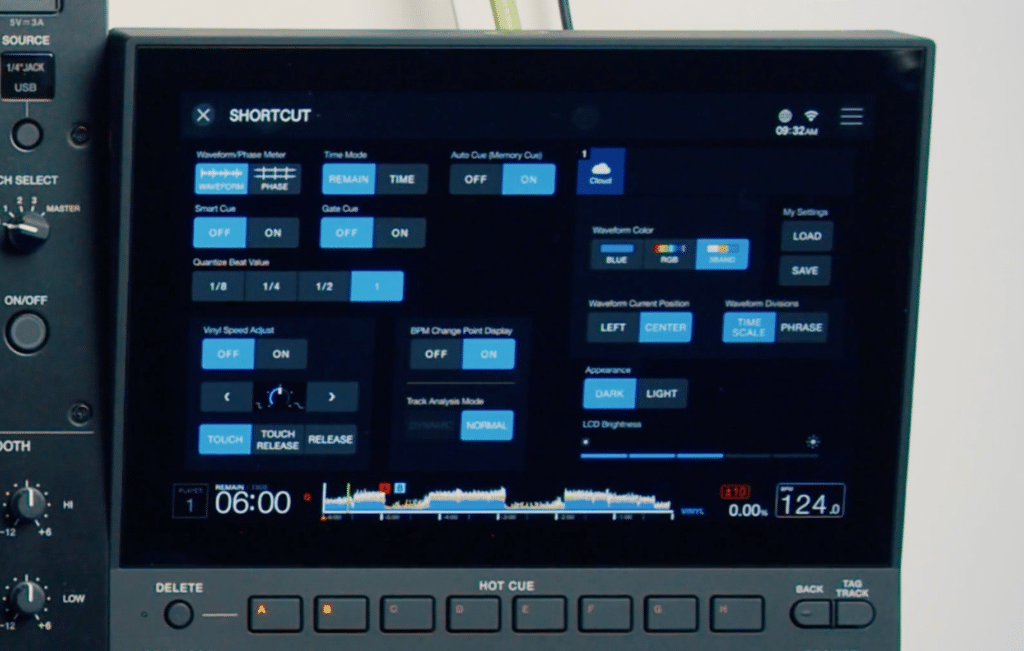
The one thing that absolutely dominates this new CDJ is the screen. That’s because, even on this much smaller unit, you get the exact same 10.1-inch capacitive touchscreen as you find on the CDJ-3000X. It’s super crisp and really responsive to the touch.
Like the 3000X, this lets you see up to 15 tracks at once, which is fantastic for when you’re scrolling through your library trying to pick out the next tune. You can also directly edit playlists on the CDJ itself.
You get more info on the waveform itself, too. You can now see the vocals analysis overlaid on top and also any BPM change points.
Another new feature is the light mode, allowing you to change the background of the screen to white, which is designed to be more visible in sunlight.
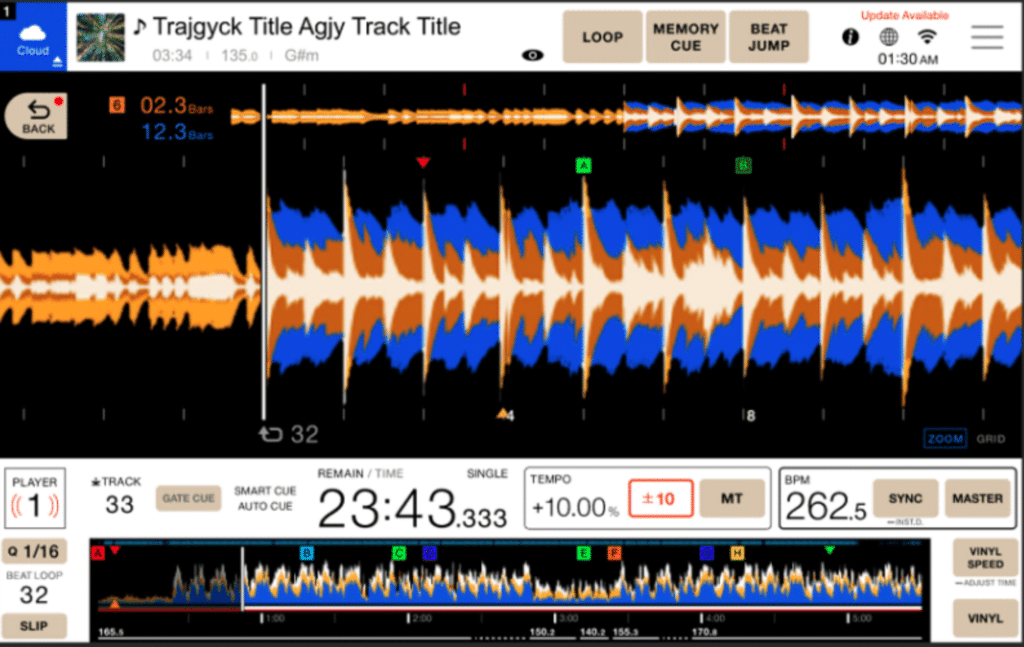
Overall, it’s a good thing you get a much bigger screen, as with all the new controls that have been moved there, it’s starting to get a bit busy. This might not be a huge issue for a lot of people, but there’s a lot going on now, and some may find it overwhelming.
Connectivity
This is one big area where the new CDJ1500X has been brought into the modern world compared to the older mini CDJs. You now get built-in, standalone Wi-Fi that works without a LAN connection, though the wired option is still available if you need it.
When it comes to music streaming, you’ve got all the same options as you would on a CDJ-3000X. So you can access Apple Music, Beatport Streaming, Tidal, Dropbox and Google Drive right there from the CDJ.
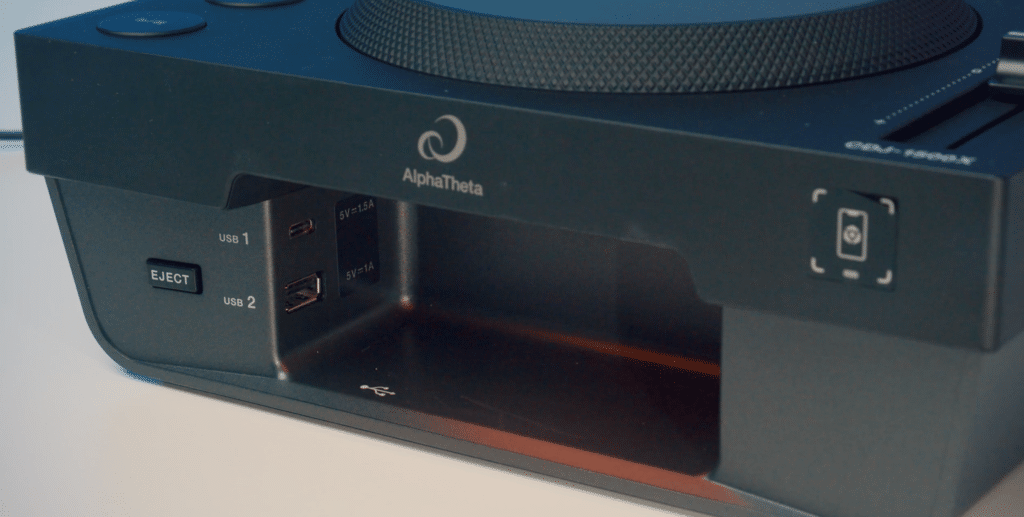
When you look at the top of the unit, one thing that you quickly notice is missing is the USB slots. They’re actually hidden away in this little illuminated alcove at the bottom of the deck. It will no doubt catch out a fair few DJs when they first use these, but you still get both USB-A and USB-C, and it helps keep things nice and tidy.
Co-Beat
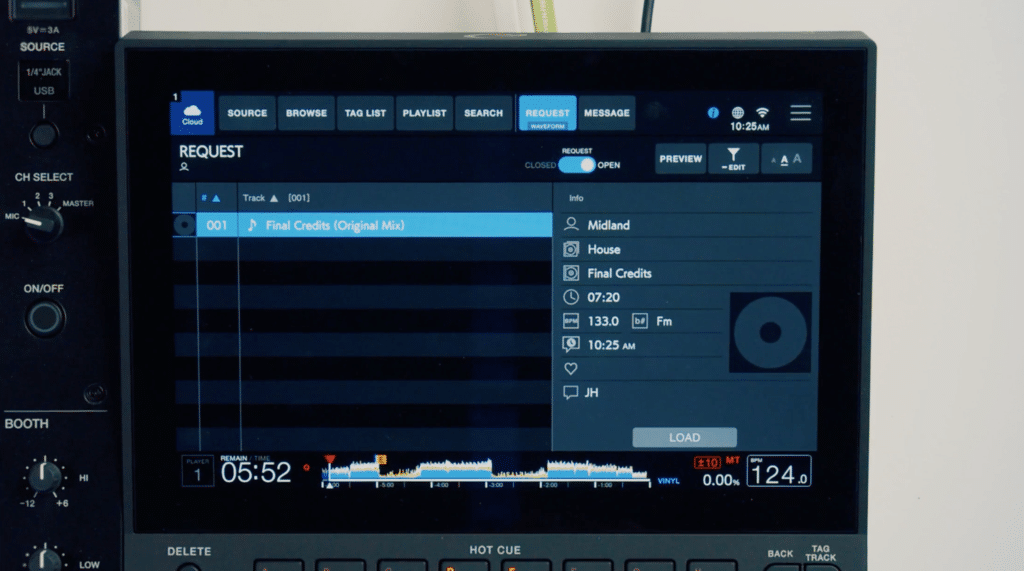
One of the biggest updates to this CDJ isn’t actually about the hardware of the unit itself; it’s a new bit of software that AlphaTheta are going to be rolling out called CoBeat. Basically, it lets you take requests from the crowd right on your CDJs. That should (hopefully) mean fewer people holding up their phones or coming up to the booth shouting at you.
It works by the crowd scanning a QR code on their phone, and then they can either request from a catalogue of tracks that you’ve preselected, or they can send you a message to request something else. The crowd can also upvote tracks that have been requested so you can see what’s most popular.
These requests come straight to you on a dedicated tab on the CDJ, where, if you like it, you can load it straight away.
It’s important to stress that this is a purely optional feature and you can turn it on and off whenever you want, so if you’re someone who hates requests, you never need to worry about this. For wedding and function DJs, though, this could be a real game-changer.
Sound Quality
The on-board audio processing is another area where the CDJ-1500X has taken a huge leap forward compared to old units like the XDJ-700 it’s replacing. That said, you still only get a standard RCA audio output, unlike the flagships, and there’s no digital coaxial output.
We’re basically at the point where all of this high-end DJ gear sounds fantastic, and you can reliably plug it into club speakers and PAs and not worry about any distortion or colouring of the sound.
Technically, there is a slight downgrade compared to the 3000Xs in terms of signal quality, but realistically, these probably aren’t designed to be plugged into the six-figure superclub speaker setups anyway, so those minute audio nerd details won’t matter at all.
Is It Worth It?
This new CDJ really nicely fills a gap in the market that’s been wide open for years. The flagship CDJs have gotten more and more unattainable as the prices have gone up and up, so it’s great to see AlphaTheta responding by giving us some more accessible options.
It’s hard to call this an affordable option, however, as you’ll still need to buy at least two of them and a mixer to get a proper setup. With the new DJM-V5 that AlphaTheta recommend stuck between a pair of these, you’re looking at a £4677 rig. That’s still squarely out of reach for most smaller venues and amateur DJs, especially when you compare it to AlphaTheta’s own XDJ-AZ all-in-one at £2799.
For anyone who’s committed to the modular CDJ system, though, this has brought the barrier to entry down massively.
CDJ-1500X vs CDJ3000X
The new 1500X is clearly shooting for a slightly different target market than its bigger brother, but that won’t stop people from drawing comparisons between the two. With the CDJ-3000X, AlphaTheta have basically gone all-out in giving us a no-expense-spared pro-level player with every feature imaginable and build quality that’s second to none. All of this, of course, is reflected in the price, and at £2,399, it’s out of reach for most home DJs and is only really bought by professional clubs and venues.
The CDJ-1500X still gives you about 80-90% of the functionality of the top-of-the-line unit, but, at just £1469, it’s now far more accessible for smaller venues and even home DJs. The few trade-offs that have to be made to realise this price aren’t too drastic and, unless you can’t live without key sync or proper jogs, you’ll likely never feel as though you’re really missing much.
| Feature | AlphaTheta CDJ-1500X | Pioneer DJ CDJ-3000X |
|---|---|---|
| Retail Price | £1,469 (€1,699 / $1,599) | £2,399 |
| Form Factor | Compact layout (252.1 mm x 374.7 mm x 116.5 mm) | Full-size club standard chassis |
| Weight | 3.6 kg | Heavyweight flagship housing |
| Touchscreen | 10.1-inch capacitive display (Shared flagship screen) | 10.1-inch capacitive display |
| Jog Wheels | Mid-sized capacitive platters with no tension adjustment | Full-sized mechanical platters with adjustable tension |
| Key Sync / Shift | Missing from hardware panel (No software alternative available) | Dedicated physical hardware buttons |
| Loop Controls | Single rotary encoder knob with push activation | Traditional physical loop In and Out buttons |
| Hot Cue Pads | Single-colour illumination (Cue types track on display) | Multi-colour pro-tier illumination |
| Audio Outputs | 1x analogue RCA pair terminal only | 1x analogue RCA pair plus 1x digital coaxial output |
| Power Supply | Rear USB-C terminal requiring external wall power brick | Classic internal power transformer with 3-pin mains cable |
Learn to mix on CDJs
If you want to play in any professional venue, you’ve got to know your way around CDJs.
But the workflow and arrangement on them can be completely different to the controller you probably use at home. So DJs often end up just falling back onto more basic mixing and not living up to the exciting performance potential that they can do on more familiar gear.
That’s why we put together our free CDJ Crash Course, where we’ll teach you how to really level up your CDJ mixing and go beyond the basics with some creative CDJ tricks, and essential library management lessons.
CDJ-1500X: Key Specifications
| Launch Date | 2 July 2026 |
| Price | £1,469 (€1,699 / $1,599) |
| Size | 252.1 mm x 374.7 mm x 116.5 mm |
| Weight | 3.6 kg |
| Display Size | 10.1-inch capacitive touchscreen |
| Audio Outputs | 1x analogue RCA pair |
| Media Inputs | 1x USB-A, 1x USB-C |
| Frequency Response | 20 Hz to 20 kHz |
| Signal-to-Noise Ratio | 105 dB |