
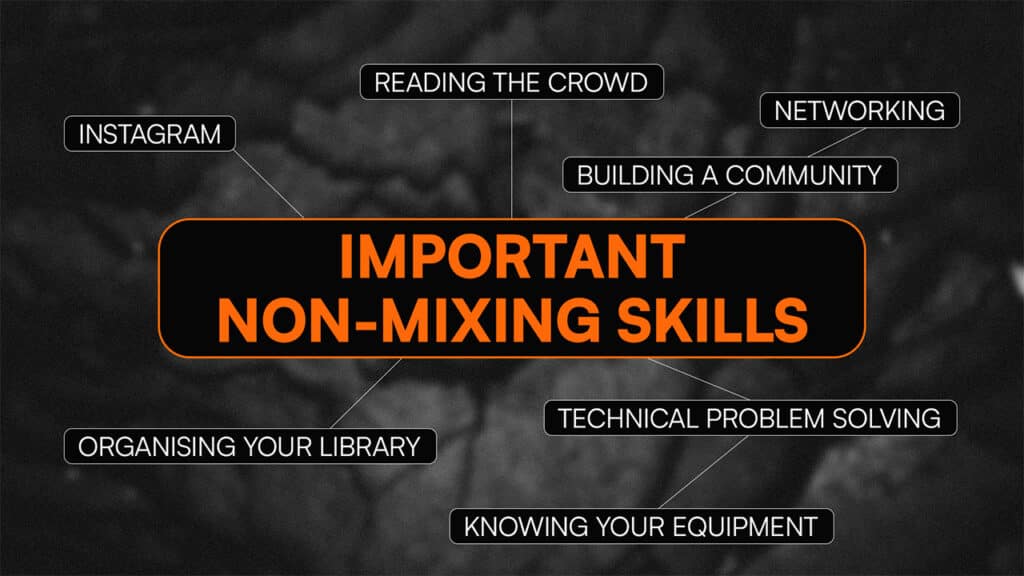
Especially as a DJ education platform, we often spend a lot of time talking about the nitty-gritty mixing skills and how to nail perfect transitions. And, sure, this sort of stuff is super important, but if we’re being honest it’s not the only thing that makes someone a successful DJ. In fact, all the other skills that don’t get as much attention can be as, if not more, important.
We asked our Crossfader community what they thought were the most important non-mixing-related DJ skills, and we got some pretty interesting answers. Here are some of the ones that stood out the most.
Social Media
Love it or hate it, social media is a huge part of any modern DJ’s job and has completely transformed the landscape for all DJs. No matter how much of a wizard you are behind the decks, if no one’s heard of you and you’re not making enough of a splash in the online world, it’s going to be very difficult to get booked.
Social media platforms like Instagram are often the main way that a lot of smaller DJs first get found. This is generally the first thing that prospective promoters will see when they look you up, so your page should act like a shopfront showing off what you’re all about. You should:
- Post a good mix of performance clips: Show off your skills behind the decks so anyone landing on your profile quickly gets a sense of your overall vibe and the music you typically play.
- Show your more human side: In a time of generic AI filling our timelines, don’t be afraid to share behind-the-scenes clips, show your mistakes, and talk to the camera about things you’ve learned. People often resonate more with that than hyper-polished content.
- Embrace the ‘social’ side of it: It’s not enough just to post and leave it at that. Make sure you’re replying to comments, supporting other DJs, and using it as a chance to network.
Networking
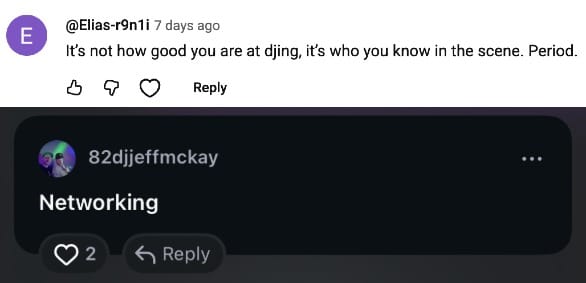
The old saying goes ‘it’s not what you know, it’s who you know’ and nowhere is that truer than in the DJ world. Having connections in the right places is a massive difference maker when it comes to getting booked, especially when you’re just starting out and don’t necessarily have the experience and track record to fall back on.
You likely can’t expect to automatically start DJing in a local scene without having first made some sort of connections with the people in it. Go out to the local club nights and just start talking and connecting with the DJs and promoters.
Crucially, don’t go straight in with asking for a leg up; try to forge a relationship before any of that.
The one thing you’ve got to remember is that networking is a two-way street. A lot of people go into it with the sort of attitude of ‘what can I personally get out of this person’, rather than ‘how can I help them and maybe get something in return.’
It may sound obvious, but treat them like regular people, be genuine and generous, and people will remember that much more than the countless beggy DJs demanding a slot.
Nowadays, though, networking doesn’t just take place in real-life clubs. Online communities can also be a great place to meet and connect with like-minded DJs. When you sign up to Crossfader for free, you’ll be able to join our exclusive Discord community, where you can network with thousands of fellow DJs from around the world.
Reading the crowd
Being able to read the crowd and tell exactly what sort of music they’re after is what separates a great DJ from a static Spotify playlist. It’s one of those skills that can take a lot of real-world experience to properly master, but there a still a few things to bare in mind if you want to get better at it.
The main thing that a lot of beginner DJs especially get wrong is just staring at the screens all night. You’re never going to be able to tell what’s going on in the room if you’re just focused on your own mixing. Look up, take it all in and get a read on how they’re reacting to the tunes you’re dropping.
A key thing is to be flexible with your set and try not to overplan everything, which can be tempting when you’re starting out. Keep testing and reacting to see what’s working. Try out a few different directions and follow what actually shifts the energy on the room. But to do that you need to make sure you’ve got a killer library of tracks sorted.
Organising your library
As a DJ, more than anything, your library of tunes is what sets you apart and makes you special.
In the heat of the moment, you need to find the perfect track to hit the spot and keep the energy going for the crowd. You want to quickly be able to filter through all the tracks that would suit the vibe, without having to scroll through loads of stuff that’s never going to work.
That’s why getting your USB properly sorted out is so crucial.
There’s no one system for this that will suit everyone, as we’ve all got different ways of thinking about our music. Ultimately, consider how you think about music personally and what goes through your mind when you’re thinking of the next tune. Maybe you’re best off filtering things by genre, vibe or sorting everything into individual playlists. Likely, the best solution will be some sort of combination of all of these things.
This is such an important part of DJing that we’ve actually got an entire course all about how to properly sort out your library. If you want to dive deeper and really explore how to get the most out of your music and always have the right tune on hand, you’ve got to check it out. You can watch a free lesson to get a taste of things and learn how we organise our own libraries.
Knowing your gear
Even for experienced pro DJs, you can never be completely confident that your gear won’t just give out halfway through your set. No matter what setup you’re playing on, it seems almost inevitable that at some point there’ll be some form of technical hiccup to interrupt you.
What sets those pro DJs apart, though, is how they can deal with it. Knowing your gear inside out can be the difference between a quick little cable switch and an agonisingly long wait to figure out what’s going on and reboot everything – all while the dancefloor goes deathly silent.
The key here is to understand everything there is to know about your setup and software. You should know what’s going on at every point in the signal flow, from your USB to the speakers. If you’re playing a gig with a setup that’s different from your home rig, make sure you’ve got some practice on that beforehand. You can hire out spaces like Pirate studios to familiarise yourself with club-style CDJ setups.
If you’ve never played on CDJs before and you’re going to use them for a club gig or open decks, make sure to check out our complete CDJ masterclass, which is perfect for anyone taking the step up from controllers and shows you exactly how they work and how to mix on them.