
We’ve just got back from the International Music Summit (IMS) in the dance music capital of the world, Ibiza. This is basically a huge expo of all things music business, with a particular focus on dance and electronic music. We got the chance to chat with loads of great artists, brands, and industry pros about the current state and future of the dance music world, and to explore the trends and issues for the year ahead.
Each year, IMS puts out their Business Report, which gives us a great snapshot of the industry and how it’s evolved over the past year. It’s rammed full of data on all things music-related, including changes in tastes and fan behaviour, as well as loads of nitty-gritty economic stats for the business pros.
A lot of this is more targeted at people who work in the music business, but there are some great takeaways for us DJs too. To save everyone from trawling through all the stats and graphs, we’ve pulled out some of the biggest takeaways that you need to know.
If you want to dig a little deeper into the data, you can check out the full report on the IMS website.
Genre Shifts
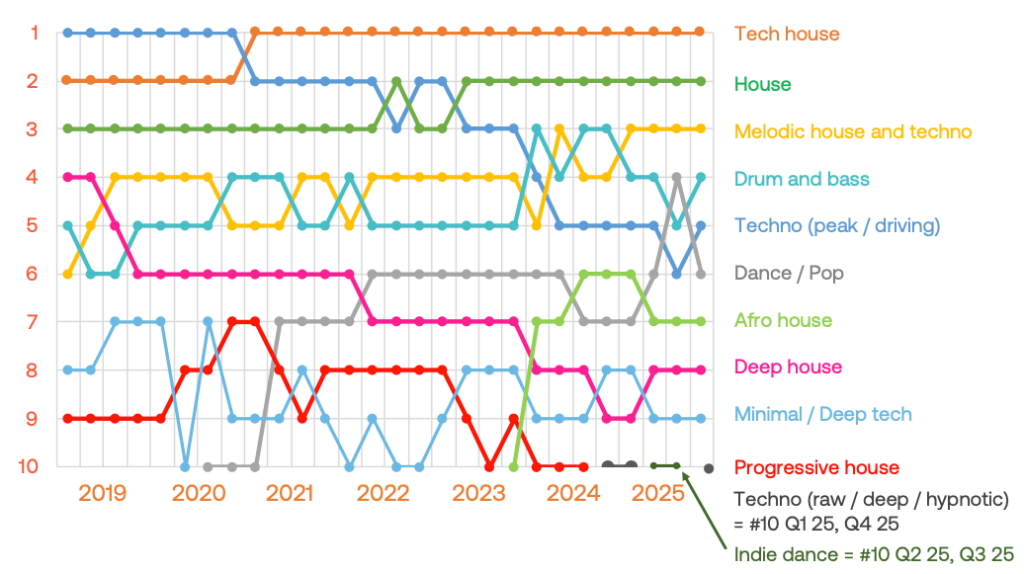
The data from the Beatport charts doesn’t immediately show any crazy changes, but under the surface, there are a couple of interesting trends. There’s no change at the top this year as Tech House continues its dominance and House is staying just behind.
Melodic House and Techno have risen in popularity, while Drum and Bass, which had a real moment last year, has slightly dipped in the charts.
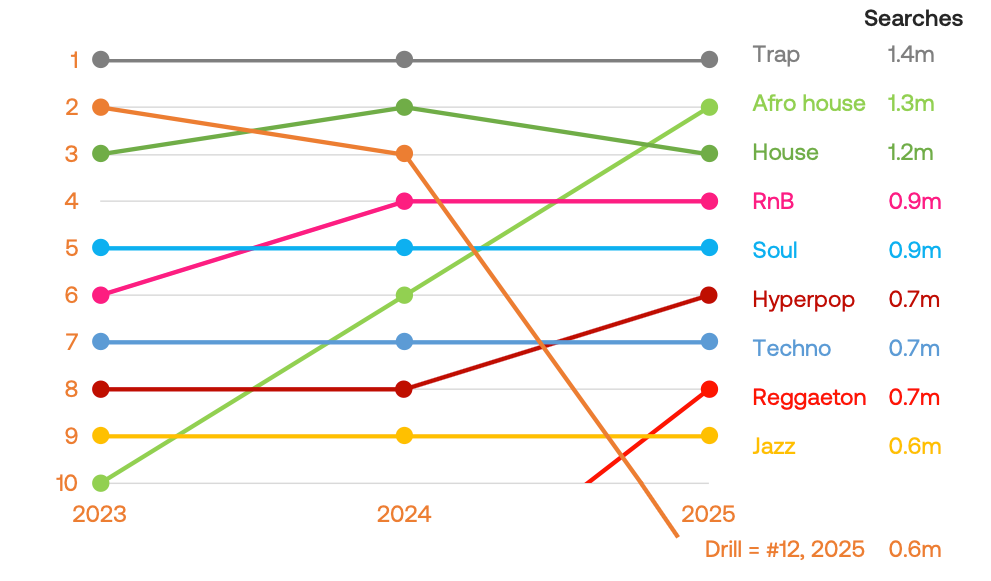
Interestingly, the charts from Splice paint a very different picture of what their producers are actually making. Trap has stayed strong at the top, while Drill has plummeted right out of the top ten. But the big headline news here is that Afro House has shot up from 10th place in 2023 up to second place in 2025.
This reflects a much wider trend that the Global South, and genres associated with these areas, are seeing massive growth. These markets are growing at twice the rate of Western markets and, due to the huge populations of these regions, can have a massive impact on global data.
This is also shown in the data from Soundcloud. Instead of the spotlight purely being on the usual European and US music, we are seeing exciting regional sounds breaking out and reaching huge audiences. The top growing electronic genres on there in 2025 were:
- Indonesian Breakbeat
- Vinahouse
- South Korean EDM
- Colombian Guaracha
- Minimal / Tech House.
The other big takeaway from Soundcloud is the love of loud, heavy dance music. Hard / Industrial Techno was the third most popular genre on there, and the percentage of hardcore and hardstyle tracks topping 180BPM has increased for each of the last three years. Also, the German Hard Techno style Schranz has boomed, with an 83% rise in uploads.
There’s a general belief of ‘hard times = hard techno’, where tougher global circumstances tend to cause people to seek refuge in more intense, harder music. So, not that we’ve got a crystal ball, but we’d expect this trend to continue.
Want to start mixing Techno? Check out a free lesson from our Techno course where you’ll learn how to use the filters to mix in and out.
Dance music is fragmenting into niches
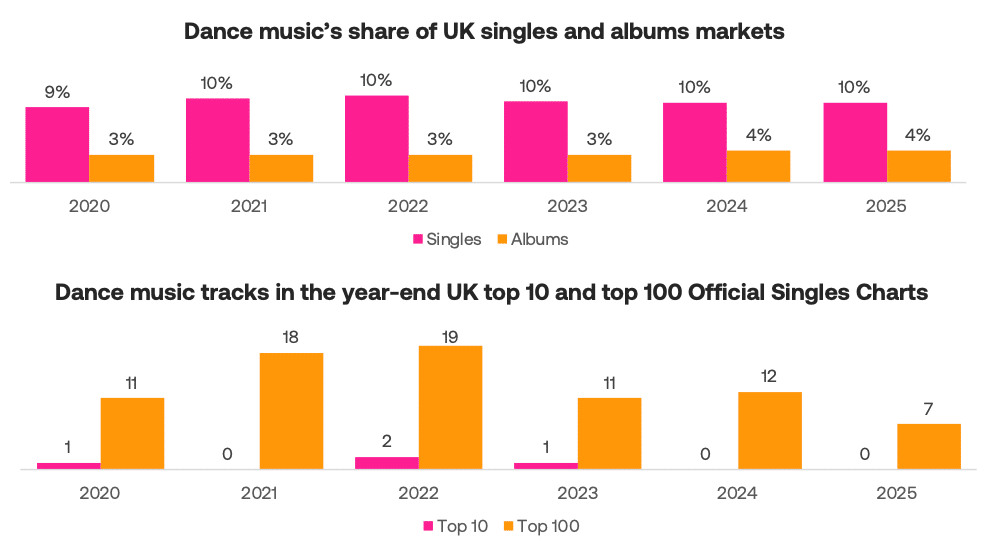
An interesting tidbit from this report is that, while dance music has maintained its share of the music industry market, there were fewer big chart hits.
This points to a wider trend of dance music (and other genres, but most prominently here) fragmenting into more niche genres and tracks, rather than the attention focusing on fewer big hits. The sense of ‘monoculture’, where the whole world listens to the same tunes, is slowly but surely evolving into a more community-driven space, where smaller scenes take charge.
This just goes to show that often you’re best off looking beyond the Beatport top charts and really digging into some more niche stuff. If you’ve got a particular scene and style that you’re into, double down on that and work to cultivate more of a community in that space, rather than aspiring to sound like what’s popular.
If you want to find the best places to discover music that takes you beyond the basic charts, check out our full guide to where to find music as a DJ.
Live music changes
It’s not just the digital music world that’s seen major changes over the last couple of years, either. The landscape of live music has also undergone rapid evolution, with money increasingly flowing towards larger artists and businesses.
The big news here actually looks like a real positive. Live music revenue (from several top live music companies) has been rising since the pandemic and reached $30 billion in 2025. In fact, that total was over twice the amount raked in in 2019.
But under the surface, the forecast is much worse. In news that won’t be a surprise to anyone who’s bought a concert ticket lately, this change was largely driven by an increase in prices. The actual number of tickets sold was down from the previous year, as seen in Ibiza, where revenue reached €160m, even though there were fewer events.
The importance of live music is especially prominent in the dance music world, where fans remark on the importance of ‘connecting IRL’ and ‘sharing experiences’ at higher rates than average music fans.
So there’s still clearly a huge hunger for live experiences and the sense of community and belonging that come with them. Lean into those opportunities and don’t be afraid to start your own scene and even put on your own club nights if those opportunities aren’t there.
Want to start putting on your own club nights? Read our complete guide to running DJ events.
Growing your DJ career in 2026
So the year ahead is looking like it could lean even more into that fragmented, smaller, more community-driven space, which could well open up some exciting opportunities for DJs to really carve out a fanbase that cares about their own unique sound.
Really, though, we’ve got no idea what to expect from the year ahead. What’s still going to matter is having those core DJ skills and promo know-how to be able to adapt to the changing landscape and keep pushing your DJ career forward.
That’s exactly what we teach at Crossfader. When you sign up for free, you’ll get a personalised learning journey to help you meet your DJ goals as well as instant access to three free courses so you can get mixing right away.