The RMX-1000 was a bit of gear you’d see in countless DJ booths, even 13 years on from its original launch. It gave DJs loads more control over effects, letting you warp and remix tracks on the fly with a range of tools that went beyond what you’d find on a mixer.
DJing has evolved a lot since 2012, however, and lots of DJs are focusing on more performance-led, creative styles of mixing and want tools like the RMX to turn the decks into more like instruments than pure music players. Now, AlphaTheta has finally given us a completely refreshed version of the RMX, the RMX-INGITE, to reflect this change in technology and performance styles.
Along with loads more powerful effects tools, we’ve now got a proper sampler and a bunch of sound and hardware upgrades. But was all this worth the long wait? And is this a genuinely useful bit of kit or an expensive toy? Let’s explore what makes this new effector special.
RMX-IGNITE Video Review
RMX-IGNITE Key Points
- Price: £1039 / $1199 / €1199
- Hardware effects unit with integrated sampler
- Three-band effects with Lever FX and Isolate FX
- Playable sampler with rubber pads and roll functions
- Sample management via desktop software and USB
Design & Layout
At first glance, the RMX-IGNITE will feel pretty familiar.
The overall layout follows some of the same RMX formula that’s been around for years, with big 3-band knobs that are easy to use in a dark booth. If you’ve ever used an RMX-1000, this won’t feel like a massive learning curve. The main loss is the famous build-up and break-down knob that took up half of the old unit, replaced by a bank of knobs and levers controlling the effects channels.
This really isn’t just a cosmetic update, though. The other biggest shift in design is on the left-hand side, where the sampler section has been completely upgraded and changed. The old plastic buttons are gone, replaced by proper rubber pads that feel designed to survive finger drumming performances.
The unit itself feels solid and premium, as you’d expect for a bit of AlphaTheta’s flagship gear. The design is in keeping with many of their newer products, with a matte black finish and overall slicker look than the in-your-face design of the 1000. At 2.3kg, it’s got a noticeable heft to it, but, like the CDJs it’s meant to work with, this is designed to live in a DJ booth rather than be super portable.
The addition of a screen also makes a real difference to how the RMX-IGNITE feels to use. This shows overall things like the input/output levels and master BPM, as well as all the samples you’re using.
Effects Section
The effects section is where the RMX-IGNITE still feels fairly familiar if you’ve used an RMX before, but there are a couple of key changes. Gone is the big ‘Scene FX’ section of the 1000, and now you’ve got the effects half of the unit split into two parts: Lever FX and Isolate FX.
Both can be applied independently to the low, mid, and high frequencies, and both include sub-parameter controls to fine-tune how they work. You can also use both of these effects sections at the same time to create some really wild sounds.
Lever FX
Lever FX are designed to give you either momentary stutters of effects or holding longer. These levers work so that if you push them up, they’ll bounce back, allowing you to apply them rhythmically, or if you push them down, they’ll latch on and stay active.
These are split across low, mid and high frequency, which is handy to be able to apply effects to a track while keeping the bass clean, for example, which can quickly get very muddy.
The Lever FX available are:
- Echo
- Reverb
- Juggle
- Reverse
- Solo
- Stretch
Juggle, Reverse, and Stretch are the more experimental effects that go beyond what you get a regelar mixer. Stretch in particular completely warps the audio within the selected frequency range and can get extreme quickly, but becomes far more usable when focused on specific bands rather than the full mix.

Isolate FX
The Isolate FX are designed for slower, more controlled shaping. Instead of being on or off, you blend in each of thees effects with large knobs, with an additional sub-parameter control that lets you adjust how the effect behaves.
Like the Lever FX, each Isolate FX can be applied to the low, mid, or high frequencies, letting you play with certain elements of the track without muddying the whole mix.
The Isolate FX are:
- Tape Echo
- Reverb
- Drive
- Filter
- Ducker
- Rhythm
Ducker and Rhythm are the unique additions here that are unlike what you’ll find on most mixers. Ducker applies an envelope to the sound of each frequency range over a one-beat cycle of the BPM, with the low, mid, and high knobs controlling the envelope and the sub-parameter adjusting its curve. Rhythm rearranges the sound of each frequency range over a one-bar cycle of the BPM, with the low, mid, and high knobs selecting different patterns and the sub-parameter controlling the duration.

Release Echo
Release Echo is designed to clear everything in one move. Pressing it deactivates all active effects and resets the unit, without needing to manually turn each section off.
There are two modes:
- Dry mode, where the effects echo out while the track continues underneath
- Mute mode, where the music is cut before being released back in
Want to learn loads of great tricks to level up your mixing? Check out our free guide to creative mixing techniques.
Sampler Section
The RMX1000’s sampler was very limited in its use, with four sample pads and very limited control over them. As such, it was rarely touched by most DJs.
The first obvious change to the sampler on the IGNITE is the pads themselves. The hard plastic buttons from the RMX-1000 have been replaced with large rubber pads, designed for repeated hits and finger drumming.

Sample Playback, Rolls & Groove Roll
Samples can be triggered as one-shots using the pads, but the roll controls add much more flexibility. Rolls follow the current BPM of the RMX-IGNITE, whether that BPM has been detected, synced, or manually set.
Along with the standard divisions, like ¼ and ⅛ notes, you also get some more unusual ones, like triplets. These divisions aren’t limited to one at a time. You can press multiple roll buttons together, combining divisions to create more unique rhythmic flowing patterns.
Sampler Effects
The sampler has its own dedicated effects that apply directly to the samples and rolls, separate from the effects used on the main input audio.
The available sampler effects are:
- Echo
- Space
- Filter
- Pitch
- Decay
- Swing
Sample Manager & USB Workflow
The RMX-IGNITE includes over 20 built-in samples, organised into factory banks. However, if you want to use your own samples, that’s all handled through the RMX-IGNITE Sample Manager on your computer. This is where you build your banks before exporting them to a USB and taking them into the booth.
The process is straightforward and familiar if you’ve worked with samples before. You drop sounds into a bank, clean them up, before you load them into the hardware.
In the Sample Manager, you can:
- Create and manage up to 15 sample banks
- Drag and drop samples into each bank
- Adjust gain levels for individual samples
- Set samples as one-shots or loops
- Enter or calculate BPM values for loops
- Trim start and end points
Each bank is capped at 16 seconds in total across the 4 samples. If you go over that, it won’t export. As such, it’s just designed for short hits and loops.
Once your banks are ready, you export them to a USB and load them straight into the RMX-IGNITE, where they appear alongside the factory banks. If your CDJs and RMX are all connected through Pro DJ Link, you can use the same USB plugged into your CDJs for your tracks.

Connectivity & Setup
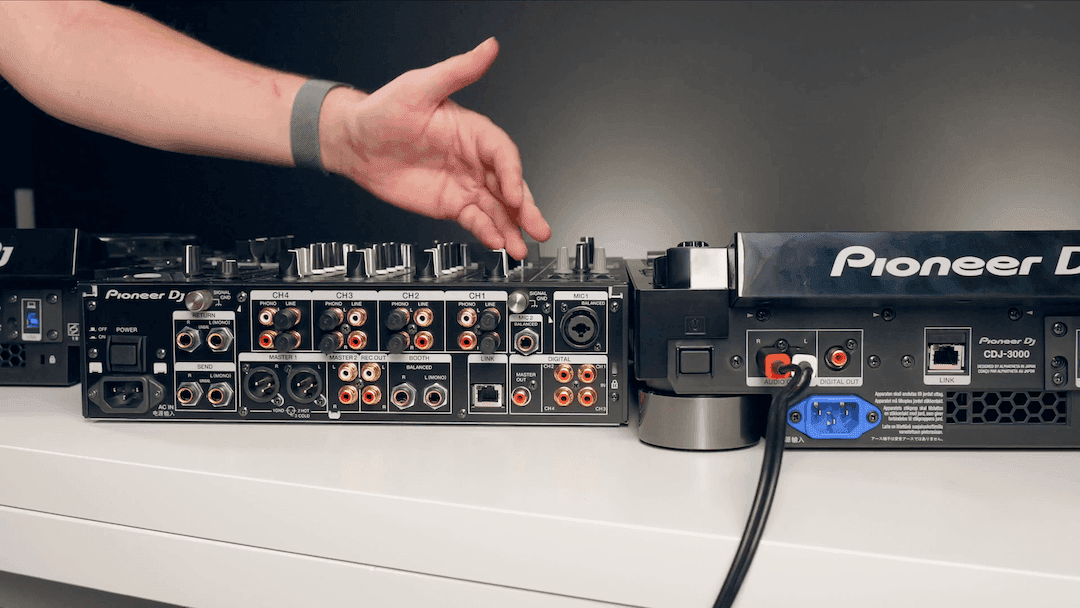
The RMX-IGNITE is built to drop into a range of DJ setups. How you connect it really comes down to the gear you’re using and how you like to work.
You’ve got three main options:

Analogue send & return
This is the classic RMX setup and will feel familiar in most club booths. You route audio from the mixer into the RMX-IGNITE and back again, just like any other external effects unit. In this setup, the RMX-IGNITE detects BPM from the incoming audio. If needed, you can tap the tempo in or fine-adjust it manually.
Digital USB connection
If you’re using a DJM-A9 or DJM-V10, you can route audio to the RMX-IGNITE digitally using a single USB cable instead of traditional analogue send and return. This keeps things tidier and avoids extra audio cables in the booth.
In this setup, the USB handles the audio path only. BPM and timing still come from PRO DJ LINK if it’s connected, or fall back to audio detection or manual BPM if it isn’t.
Pro DJ Link
In club-style setups with linked players, Pro DJ Link handles BPM information across the system. This keeps effects and rolls locked to tempo without relying on audio detection.
If Pro DJ Link isn’t available, the RMX-IGNITE still works by analysing incoming audio or running on a manually set BPM, so it’s not locked to one type of setup.
Around the back, you can also match output levels depending on how you’re using the unit, whether that’s via send and return, the digital USB connection, or a master output.
Sound Quality
Sound quality is one of the less immediately obvious upgrades on the RMX-IGNITE, but it’s one of the most important. Compared to the original RMX-1000, the sound processing should be cleaner and more transparent, which is especially important when you’re stacking loads of sounds, effects or you’re running through a big speaker system.
The RMX-IGNITE uses updated DSP processing and high-grade ESS converters, which are in line with AlphaTheta’s newer club-standard gear. This should help you maintain the dynamics and character of the music and make sure your effects don’t muddy it up too much.
RMX-IGNITE vs RMX-1000
As you’d hope for a bit of gear 12 years in the making, the RMX-IGNITE is a clear head and shoulders upgrade on its predecessor in pretty much every respect.
The original RMX1000 was designed purely as an effects unit to expand on the capabilities of your mixer and give you some more creative performance options, especially at a time when mixer effects were a little more limited than we’ve come to expect now.

The main step up we’ve got in the RMX-IGNITE is that it’s no longer purely an effects unit and instead positions itself as much more of a general performance tool thanks to its built-in sampler. This makes doing modern finger-drumming and on-the-fly remixing possible where it just wasn’t on the previous model.
The effects themselves feel a bit more powerful and customisable than the macro build-up and break-down effects on the 1000. These were fun and easy to use but the addition of the levers and release switch are genuinely useful upgrades.
There’s been a fairly substantial increase in price of the new unit, but that’s hardly a major shock given it comes with new features and has had to wait through 12 years of inflation.
Final Verdict
Overall, the RMX-IGNITE has been one of the longest anticipated bits of DJ gear we’ve ever covered. The original RMX-1000 was an icon with longevity that few bits of digital gear ever manage. So there were some pretty big expectations to say the least.
We’re very happy then that this really meets those expectations and then some. Where the original RMX was a fairly single-use tool (albeit a fantastic one), the addition of a sampler really elevates this to a proper performance tool and opens up more creative avenues.
The price will be a sticking point for many as, at £1039 / $1199 / €1199, it’s hardly cheap. However, this is squarely aimed at the professional market, and is designed to be integrated into full CDJ rigs which will cost well into the high thousands of pounds. And if you get 12 years of use out of this like the last model, that won’t feel too steep.
If you want to learn some of the creative DJ skills to get the most out of this sort of gear, make sure to sign up to Crossfader, where you’ll get a free personalised learning plan and access to three free courses.


0 Comments