
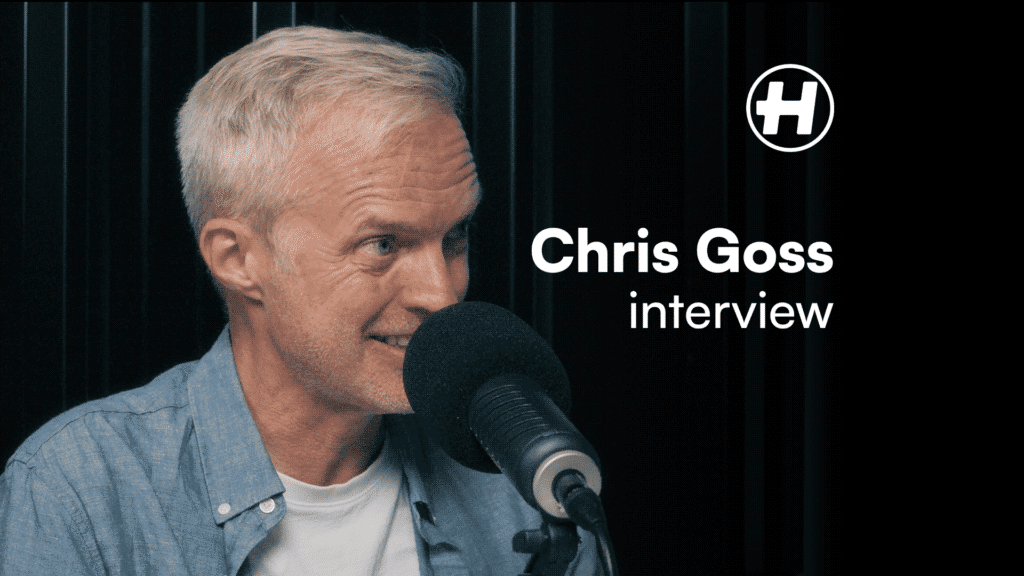
Thirty years is basically an eternity in the rapidly moving world of dance music. In this time, countless labels have shot up and quickly dissolved, as the industry shifted from white labels and physical releases to streaming and social media. One of the few labels to survive these massive changes over this period is also one of the most iconic names out there: Hospital Records.
They’re a name that’s truly synonymous with drum ‘n’ bass and have gone from an underground cult following to a global brand, all while staying independent and true to their original ethos. That’s down in large part to Chris Goss, their co-founder and CEO, who’s been at the centre of that journey and helped shape the label into the powerhouse it is today.
To celebrate three decades in the business, we asked Chris about the early days of Hospital, how it’s navigated a constantly shifting industry, and what a record label actually looks like in 2026.
What was the early drum & bass scene like when you started out in the 90s, and what pushed you to try and carve out something new?
Back in 94/95, jungle and drum & bass was the most exciting sound around – smashing out of car windows, shops, bars and people’s flats. It was totally compelling, and we wanted to be part of that world. Tony and I knew it was pointless to try and copy anything or try and be someone we clearly were not…so we spent months in our studio listening, experimenting, digging and sampling, and gradually building and evolving our own unique pot of left-of-centre, musical drum & bass.
In those early years, what was the biggest challenge in keeping the label alive?
I guess patiently trying to build a name and profile for ourselves, whilst waiting for the door to finally open a little, and hopefully let us in. Early on it was just the two of us chopping away at everything, but within 4-5 years we’d met two young upstarts, High Contrast and Danny Byrd – and their unmistakable sounds and perspectives began to mark us out as a label worth checking for.
Was the ‘Hospital sound’ something that you specifically tried to curate, or did it come about naturally from the artists you were working with at the time?
In all honesty, it simply evolved through the early music Tony and I made together, and the output from our first wave roster – Danny Byrd, High Contrast, Nu:Tone and Cyantific. Each artist brought their own unique ideas and imagination to the table, creating tracks and projects that were highly personal and individual but also entirely complementary to each other.
To be honest, we became lazily tagged with being a ‘jazzy’ or ‘liquid’ label. But when anyone might care to look back at the three decades worth of music, I genuinely believe we are one of the broadest drum & bass brands working today: from High Contrast to Nu:Tone, Bop to Camo & Krooked, Etherwood to Royalston, Flava D to Reso, SOLAH to Kings Of The Rollers…our archive touches on all four corners of the genre.
During your time, the music industry has completely shifted from physical sales to streaming. How has this changed the job of Hospital?
The industry has been entirely turned upside down during the company’s 30-year history. It’s mad to think that back when we started, I was making cassette promos for journalists, and personally sticking and hand-posting 250 white label 12-inch records for every release…there was only dial-up Internet and physical music products back in ’96.
We’ve since moved through all manner of music retail formats, workspace communications and every type of marketing and promo. Like any sensible company in the creative arts, we have simply done our best to be well-read, well-connected and to stay on top of the multiple changes within our industry and society.
What is it that you think meant that Hospital adapted and stayed relevant over the last 30 years, while many record labels haven’t?
Firstly, we are drum & bass fans. We love the culture, the tempo, the energy and the people. And since day one we always firmly believed in artist development and storytelling. Alongside our conviction in the essence of music-making and songwriting, we made sure – especially through our first decade – that we would be extremely careful with our finances, and reinvest profits back into the company.
We managed to get a mortgage on our first premises in 2004, paying it all off within three years – this was a fundamental step to building a brilliant staff team and growing our roster, events, catalogue and company activities.
Ever since then, I believe we have always worked hard to study the shifting sands of our industry, talk to friends and colleagues running independent music companies, and collectively aim to make thoughtful and careful decisions about how we moved forwards together. The music industry post-COVID and post-Brexit has never been more challenging and demanding. But if we continue to believe in each other and the legacy we have built, I have a stubborn belief in our prospects for the next 30 years.
Want to learn how to DJ drum & bass? Try this free lesson from our beginner course, where you’ll learn how to mix tracks that start without drums.
Watch Free LessonHospital has grown to be a recognisable brand beyond just the record label, with Hospitality events, tours and collabs. Was this a natural evolution or a conscious move to adapt the business?
Frankly, we started Hospitality because no one would book us! But also, the Do-It-Yourself ethos is an essential factor in building an independent business. The club brand is something we built steadily over a number of years, managing to really expand after moving to Heaven in 2005 and then the amazing fabric-owned Matter in 2008. We patiently waited until our plans aligned to launch our very first festival in 2015, delivering the first week-long beach festival in 2018.
Other essential company projects like merchandise, publishing, sync-licensing, were natural and essential facets to building the Hospital brand. But all of these revenue streams were built slowly and carefully, to avoid unnecessary risks or financial strife.
When you’re managing artists, how has the role of a record label changed over the last 30 years, and what do you find yourself doing now that you didn’t use to?
One of the biggest changes is the pace of everything, the immediacy, the impatience, and also the absolute flood of music on a weekly basis. I’d say one of the biggest ‘modern’ challenges is navigating endless release dates across the scene, given the lack of label ‘exclusivity.’ I’m all for artist-driven projects, but there can be a real scattergun approach to music retail, which is often just a race to the bottom.
Quality and strategy have never been more essential factors in building artist careers, but it is increasingly hard to deliver imaginative and innovative campaigns. That said, we still work hard to build the collaborative, working relationships with artists that we have always invested in. Genuine, human interaction has never been more essential, and we are committed to that connectivity and storytelling more than ever.
What excites you most about the next 30 years of Hospital Records?
The exciting, boundary-pushing, underground talent we haven’t yet met…
If there’s one thing that comes through in Chris’ perspective, it’s that while the industry continues to shift, the fundamentals don’t really change. You’ve still got to have the dedication, mindset and skills to make it.
That’s exactly what we aim to build at Crossfader. Whether you’re just starting out or a pro looking to learn new tricks, we’re here to help you develop that confidence and skillset.
When you join Crossfader for free, you get a personalised learning journey to help you meet your DJ goals as well as access to three free courses and our music pack, so you can get mixing right away.